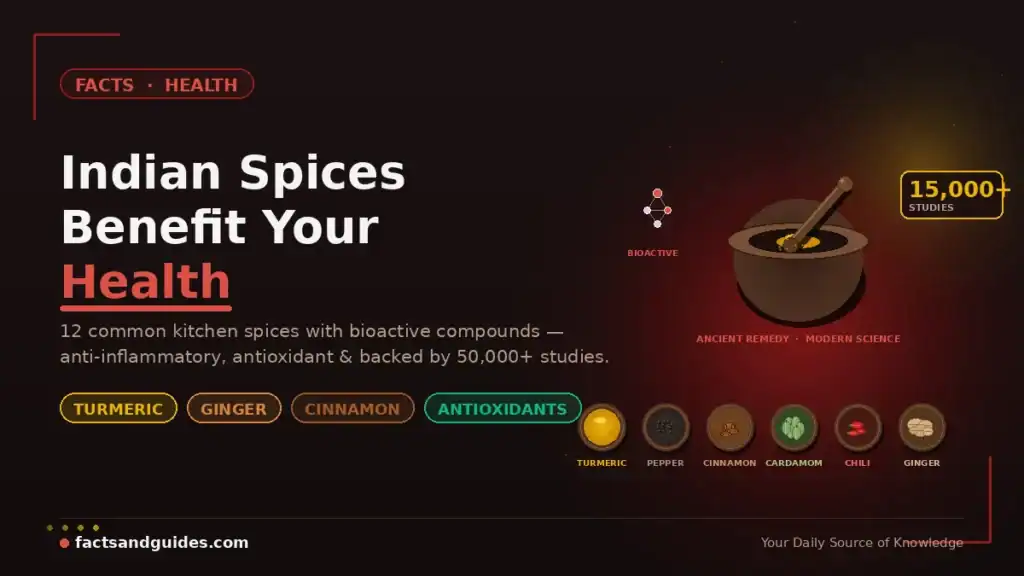
Every Indian kitchen is a pharmacy hiding in plain sight. The turmeric in your dal, the cumin in your tadka, the ginger in your chai, the cinnamon in your biryani — these are not just flavour agents. They contain bioactive compounds that have been studied in over 50,000 published scientific papers. And modern research is increasingly confirming what Ayurveda has taught for thousands of years: Indian spices benefit your health in measurable, documented ways.
This guide covers 12 common Indian kitchen spices — with the specific active compound that makes each one beneficial, the peer-reviewed research behind it, practical dosage guidance, and how to maximise absorption. No exaggeration, no miracle claims — just what the science actually says about the health benefits of Indian spices.
- Turmeric’s curcumin has 15,000+ published studies — one of the most researched plant compounds Black pepper increases turmeric absorption by 2,000% — always combine them Cinnamon can improve insulin sensitivity — but choose Ceylon over Cassia for safety Ginger is clinically proven to reduce nausea from motion sickness, pregnancy, and post-surgery Indian cooking naturally combines spices in synergistic ways that enhance each other’s absorption These spices work best as part of a balanced diet — not as supplements in mega-doses
Health Benefits of Indian Spices: 12 Spices at a Glance
| Spice (Hindi Name) | Active Compound | Key Benefit | Evidence |
|---|---|---|---|
| Turmeric (Haldi) | Curcumin | Anti-inflammatory, antioxidant | ⭐⭐⭐⭐⭐ Very Strong |
| Cumin (Jeera) | Thymoquinone, iron | Digestion, blood sugar | ⭐⭐⭐⭐ Strong |
| Ginger (Adrak) | Gingerols, shogaols | Anti-nausea, anti-inflammatory | ⭐⭐⭐⭐⭐ Very Strong |
| Cinnamon (Dalchini) | Cinnamaldehyde | Insulin sensitivity, blood sugar | ⭐⭐⭐⭐ Strong |
| Black Pepper (Kali Mirch) | Piperine | Absorption enhancer, antioxidant | ⭐⭐⭐⭐⭐ Very Strong |
| Fenugreek (Methi) | Galactomannan | Blood sugar control, lactation | ⭐⭐⭐⭐ Strong |
| Cardamom (Elaichi) | Cineole | Digestive, blood pressure | ⭐⭐⭐ Moderate |
| Cloves (Laung) | Eugenol | Antibacterial, dental pain | ⭐⭐⭐⭐ Strong |
| Coriander (Dhaniya) | Linalool | Cholesterol, digestive | ⭐⭐⭐ Moderate |
| Mustard Seeds (Rai) | Allyl isothiocyanate | Anti-inflammatory, circulation | ⭐⭐⭐ Moderate |
| Fennel (Saunf) | Anethole | Digestive, anti-bloating | ⭐⭐⭐ Moderate |
| Asafoetida (Hing) | Ferulic acid | Digestive, anti-flatulence | ⭐⭐⭐ Moderate |
Turmeric Curcumin Benefits Research: India’s Most Studied Spice
1. Turmeric (Haldi) — The Golden Anti-Inflammatory
Curcumin, the active compound in turmeric, has been the subject of over 15,000 published scientific studies — making it one of the most researched plant compounds in history. The turmeric curcumin benefits research consistently shows potent anti-inflammatory and antioxidant properties comparable to some pharmaceutical drugs, without the side effects at normal dietary doses.
What research shows: Curcumin inhibits NF-κB, a molecule that triggers inflammation at the cellular level. Studies show benefits for joint inflammation (arthritis), inflammatory bowel conditions, brain health (may support BDNF production), and oxidative stress reduction. A 2017 meta-analysis confirmed curcumin’s significant anti-inflammatory effects across multiple conditions.
The absorption problem and its solution: Curcumin is poorly absorbed by the body — only 1–2% reaches the bloodstream when consumed alone. However, piperine (found in black pepper) increases curcumin absorption by up to 2,000%, according to research published in Planta Medica. This is why traditional Indian cooking combines haldi with kali mirch — a practice validated by modern science.
Daily use: ½–1 teaspoon of turmeric in dal, sabzi, milk (haldi doodh), or rice — always with a pinch of black pepper and a small amount of fat (ghee, oil) for better absorption.
2. Ginger (Adrak) — Clinically Proven Anti-Nausea Power
Ginger has the strongest clinical evidence of any spice for a specific therapeutic use — reducing nausea. Multiple randomised controlled trials have confirmed its effectiveness against nausea from motion sickness, pregnancy morning sickness, and post-surgery recovery. Gingerols and shogaols, the active compounds, also have documented anti-inflammatory effects comparable to mild NSAIDs.
What research shows: A Cochrane systematic review confirmed ginger’s effectiveness for pregnancy-related nausea. Studies also show benefits for muscle soreness (2g/day reduced exercise-induced muscle pain by 25%), menstrual pain, and inflammatory markers.
Daily use: Fresh ginger in chai (adrak chai), grated in sabzi, or thin slices with lemon and salt as a digestive pre-meal. 1–2 grams per day is the researched effective dose.
3. Cumin (Jeera) — Digestion and Blood Sugar Support
Cumin is the most widely used spice in Indian tadka — and it does far more than add flavour. Research published in Complementary Therapies in Clinical Practice found that cumin supplementation reduced fasting blood sugar, HbA1c, and serum insulin in participants with type 2 diabetes over 8 weeks.
What research shows: Cumin stimulates digestive enzyme secretion, supports iron intake (66mg per 100g — one of the richest plant sources), and may improve cholesterol profiles. Its essential oils have documented antibacterial properties against foodborne pathogens.
Daily use: Jeera tadka in dal, raita, or roasted cumin powder (bhuna jeera) sprinkled on curd, chaat, and salads.
4. Cinnamon (Dalchini) — Insulin Sensitivity Enhancer
Multiple studies published in the Journal of Medicinal Food show that cinnamon can improve insulin sensitivity and lower fasting blood sugar in people with type 2 diabetes. Cinnamaldehyde, the active compound, mimics insulin at the cellular level and enhances glucose uptake.
5. Black Pepper (Kali Mirch) — The Bioavailability Multiplier
Black pepper’s superpower is not its own health benefits (though it has antioxidant properties) — it is its ability to dramatically increase the absorption of other nutrients and compounds. Piperine, its active compound, enhances curcumin absorption by 2,000%, improves the bioavailability of vitamins A, C, selenium, and beta-carotene, and supports digestive enzyme activity.
Daily use: A pinch of freshly ground black pepper in every meal that contains turmeric. Also beneficial in chai, soups, salads, and as a finishing seasoning.
6. Fenugreek (Methi) — Blood Sugar and Lactation Support
Fenugreek seeds contain galactomannan, a soluble fibre that slows sugar absorption in the stomach and stimulates insulin production. Studies in the International Journal for Vitamin and Nutrition Research show significant improvements in glucose tolerance with fenugreek supplementation. It is also traditionally used (and research-supported) for increasing breast milk production in nursing mothers.
Daily use: Soaked methi seeds (1 teaspoon overnight, consume in the morning), methi in parathas, methi in dal, or methi sprouts in salads.
Indian Kitchen Spices for Immunity: 6 More Powerhouse Ingredients
Beyond the big 6, these everyday Indian kitchen spices for immunity add both flavour and documented health protection to your meals.
7. Cardamom (Elaichi) — Digestive and Blood Pressure Support
Cardamom contains cineole, a compound with documented antibacterial and anti-inflammatory properties. A study in the Indian Journal of Biochemistry found that cardamom supplementation significantly reduced blood pressure in participants with stage 1 hypertension over 12 weeks. It is also one of the most effective natural breath fresheners.
8. Cloves (Laung) — Nature’s Dental Anaesthetic
Eugenol, the active compound in cloves, has been used in dentistry for over a century as a pain-relieving and antibacterial agent. Clove oil applied to a toothache provides genuine temporary pain relief — this is not folk medicine, it is standard dental practice. Cloves also have among the highest antioxidant ORAC values of any food tested.
9. Coriander (Dhaniya) — Cholesterol and Digestive Support
Both coriander seeds and fresh coriander leaves (cilantro) contain linalool and other compounds that may help reduce LDL cholesterol and support healthy digestion. Animal studies show promising cholesterol-lowering effects, with human research still growing. Coriander water (soaked seeds overnight) is a traditional digestive remedy now being studied scientifically.
10. Mustard Seeds (Rai/Sarson) — Anti-Inflammatory Isothiocyanates
Mustard seeds contain allyl isothiocyanate — the same family of compounds found in broccoli and wasabi that research links to anti-cancer and anti-inflammatory effects. The traditional mustard oil massage (common in North India) has documented warming and circulation-improving properties.
11. Fennel (Saunf) — The After-Meal Digestive
The Indian tradition of chewing saunf after meals is supported by research showing fennel’s ability to relax smooth muscles in the digestive tract, reduce bloating, and ease indigestion. Anethole, its primary compound, has documented anti-spasmodic and carminative properties.
12. Asafoetida (Hing) — The Flatulence Fighter
Hing is added to Indian dal and legume recipes specifically because it reduces the gas-producing compounds in beans and lentils. Ferulic acid and other volatile compounds in asafoetida have documented anti-flatulence, anti-spasmodic, and antimicrobial properties. A pinch of hing in every dal is functional cooking, not just tradition.
Ayurvedic Spices & Modern Science: Where Tradition Meets Evidence
The connection between Ayurvedic spices and modern science is not coincidence. Many Ayurvedic principles — like combining turmeric with pepper and fat, using ginger for digestive fire (agni), or adding hing to legumes — are now validated by peer-reviewed research. However, it is important to note that not all traditional claims have been scientifically confirmed, and some require more rigorous human studies.
| Ayurvedic Claim | Modern Science Says | Verdict |
|---|---|---|
| Haldi + kali mirch together | Piperine increases curcumin absorption by 2,000% | ✅ Confirmed |
| Ginger improves “agni” (digestion) | Gingerols stimulate digestive enzymes and reduce nausea | ✅ Confirmed |
| Hing reduces gas from dal | Ferulic acid has anti-flatulence properties | ✅ Confirmed |
| Saunf after meals aids digestion | Anethole relaxes smooth muscles, reduces bloating | ✅ Confirmed |
| Dalchini controls blood sugar | Cinnamaldehyde improves insulin sensitivity | ✅ Confirmed (with caveats about Cassia coumarin) |
| Haldi cures cancer | Curcumin shows anti-cancer potential in lab studies; NO clinical proof as a cancer treatment | ⚠️ Overblown — research is promising but not a cure |
| Spices can replace medicine | Spices complement medical treatment; they do not replace it | ❌ False and dangerous if relied upon alone |
Smart Spice Combinations: How Indian Spices Benefit Your Health Together
Indian cooking does not use spices in isolation — it combines them in ways that enhance each other’s absorption and effects. Here are the most scientifically validated combinations.
- Turmeric + Black Pepper + Ghee: Piperine boosts curcumin absorption 2,000%; fat (ghee) improves cellular uptake. The classic Indian dal tadka is a biochemistry lesson.
- Cumin + Coriander + Fennel: The “CCF tea” combination used in Ayurveda — all three support digestion through complementary mechanisms (enzyme stimulation, smooth muscle relaxation, anti-bloating).
- Ginger + Cardamom + Cinnamon: Common in chai masala — ginger’s anti-nausea, cardamom’s digestive, and cinnamon’s blood-sugar effects combine for a genuinely therapeutic daily drink.
- Hing + Cumin + Mustard Seeds: The classic dal tadka — hing reduces gas, cumin supports digestion, mustard seeds add anti-inflammatory compounds.
Want to put these spices to work in your morning? Read our 25 Healthy Indian Breakfast Recipes. And to understand how nutrition timing affects health, check our Complete Intermittent Fasting Guide.